If you love the spiced caramel taste of speculoos cookies, you are going to enjoy this dairy free biscoff cake.
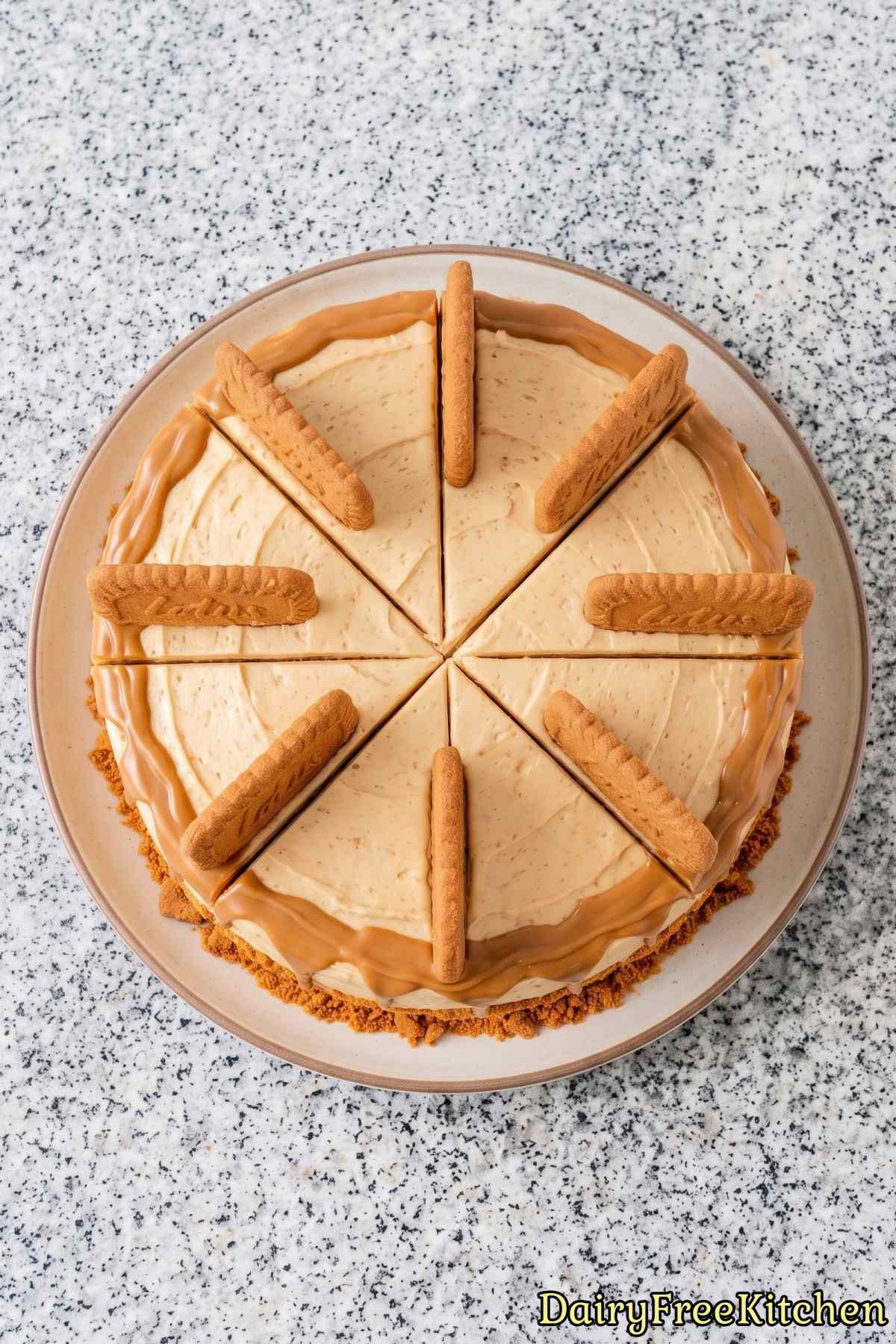
Biscoff spread is naturally made without milk, which makes it one of my favorite ingredients to bake with when skipping dairy.
In this recipe, I use it in both the soft sponge layers and the fluffy frosting, so you get plenty of that warm cookie flavor in every bite.
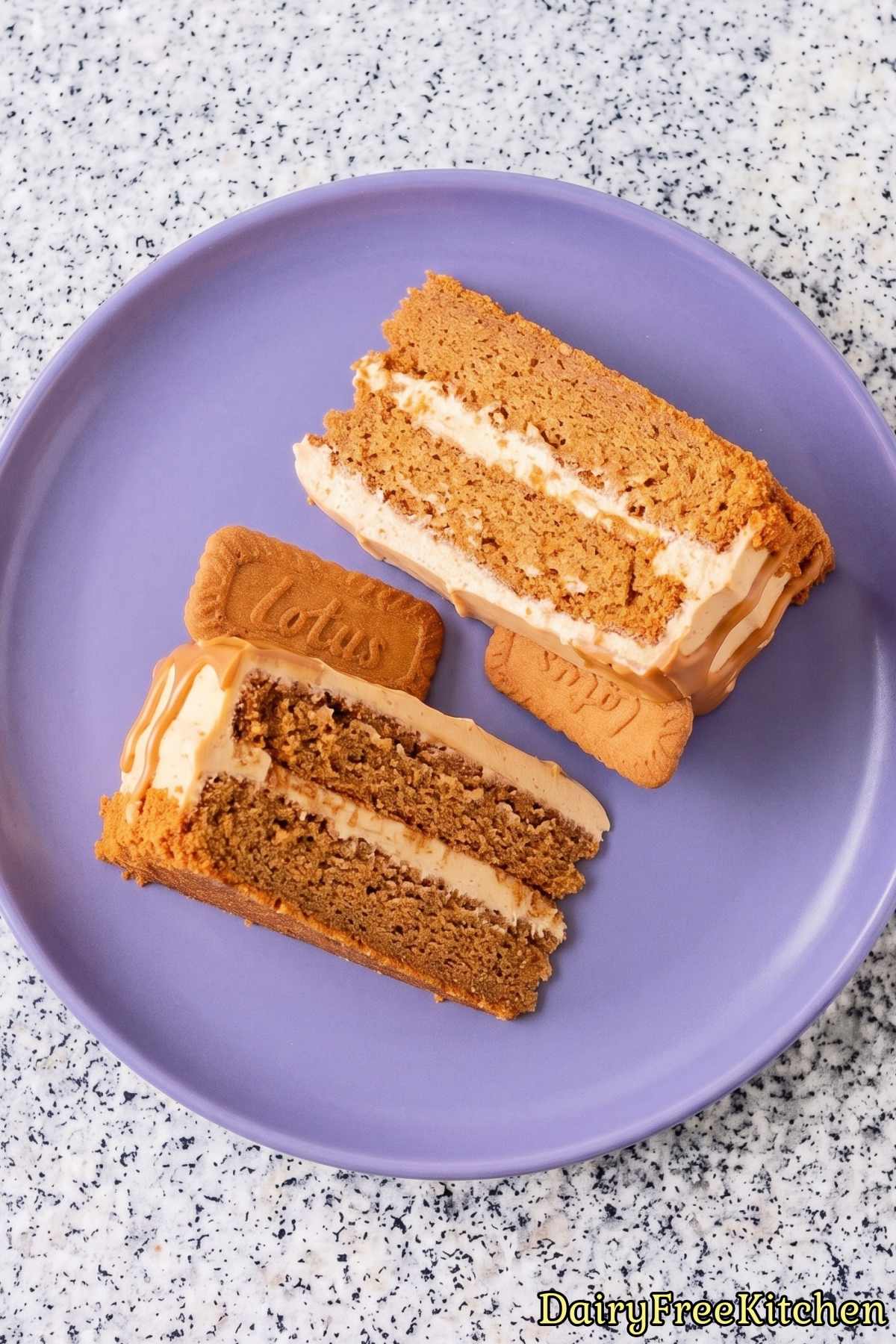
Finding a rich layer cake that is completely dairy free can be tough, especially one that stays light and tender.
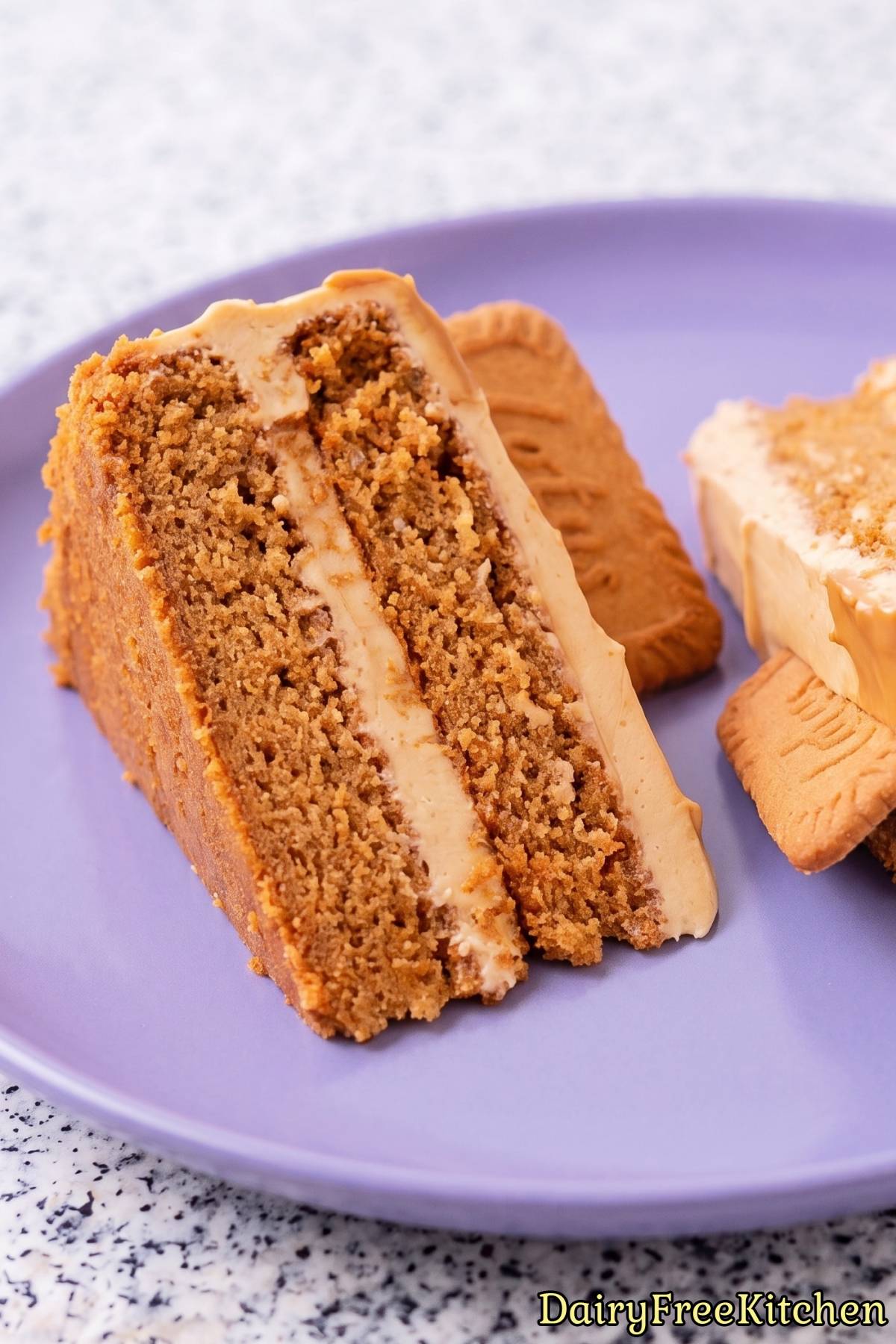
This cake stays wonderfully moist thanks to simple plant-based swaps, and it looks beautiful enough for any party or family dinner.
Why This Recipe Is a Keeper
Loaded with Biscoff Flavor – You get rich spiced cookie butter baked straight into the cake and swirled into the frosting.
Amazingly Soft and Moist – The homemade dairy-free buttermilk keeps every single slice remarkably tender without any dairy.
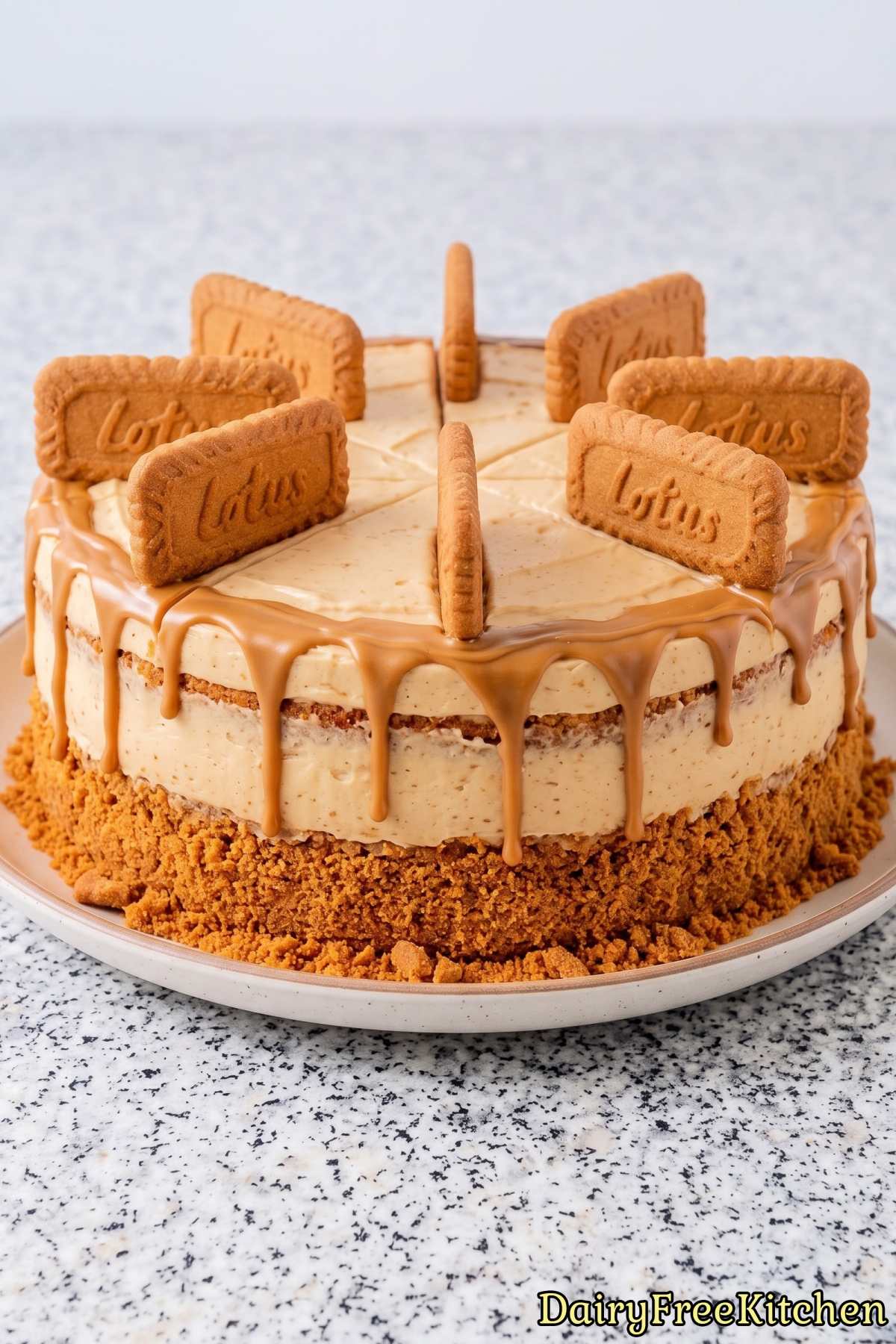
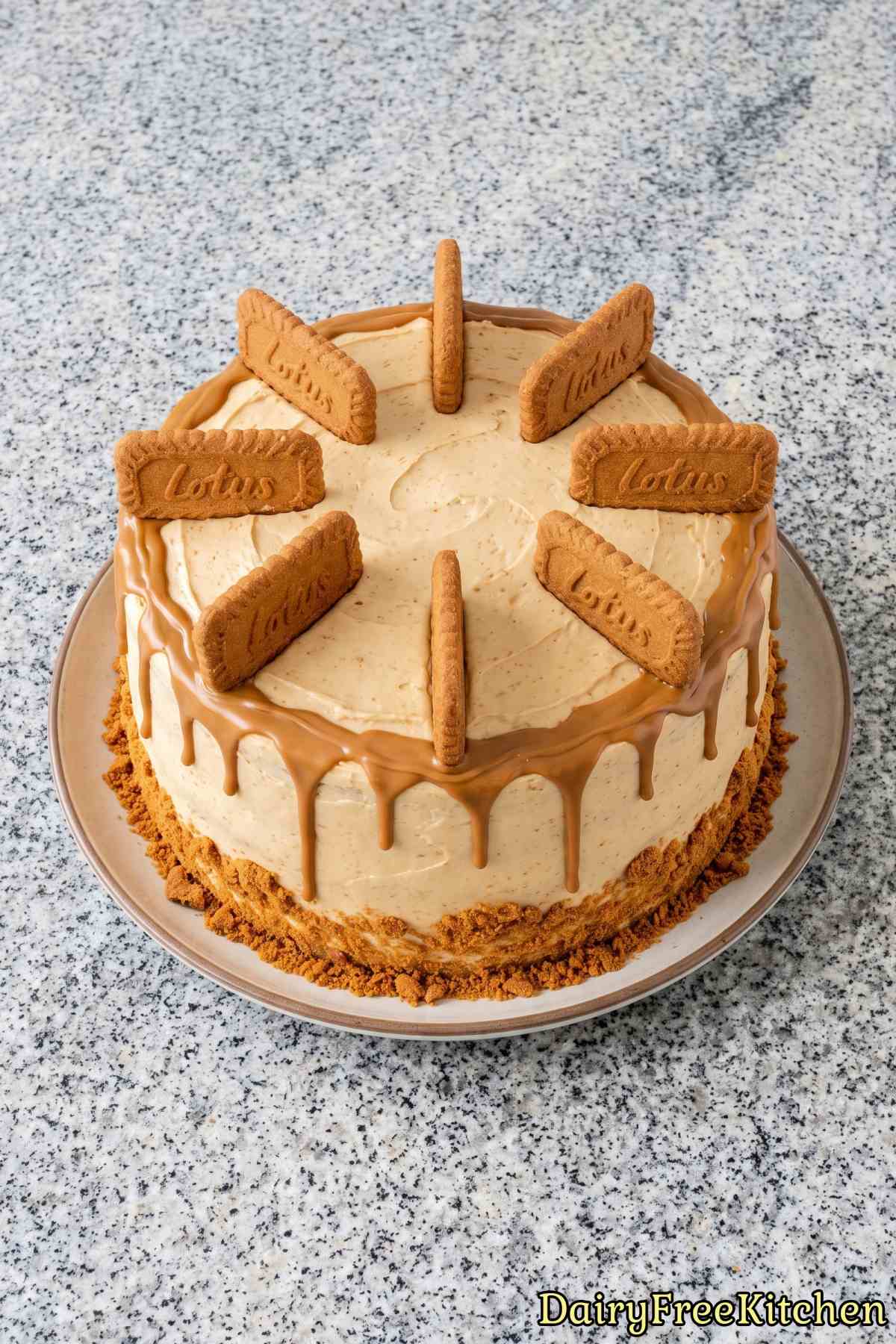
Bakery-Style Presentation – The glossy cookie butter drip and whole cookies on top make it look like a professional masterpiece.
Fun Contrasting Crunch – Crushed cookies pressed on the sides add an exciting, crunchy bite to every velvety forkful.
Here’s What You’ll Need
For the Cake
- 1 cup Unsweetened Almond Milk, Room Temperature
- 1 tbsp Apple Cider Vinegar
- 2 1/2 cups All Purpose Flour
- 2 tsp Baking Powder
- 1/2 tsp Baking Soda
- 1/2 tsp Salt
- 1 tsp Ground Cinnamon
- 3/4 cup Dairy Free Butter, Softened
- 1/2 cup Biscoff Cookie Butter
- 1 cup Packed Light Brown Sugar
- 1/2 cup Granulated Sugar
- 3 Large Eggs, Room Temperature
- 2 tsp Vanilla Extract
For the Frosting
- 1 cup Dairy Free Butter, Softened
- 1/2 cup Biscoff Cookie Butter
- 3 1/2 cups Powdered Sugar, Sifted
- 1 tbsp Unsweetened Almond Milk
- 1 tsp Vanilla Extract
- 1/8 tsp Salt
For Decorating
- 1/3 cup Biscoff Cookie Butter, Melted
- 12 Biscoff Cookies, Divided
How to Make It
Step 1
Preheat the oven to 350°F, then grease two 8-inch round cake pans and line the bottoms with parchment paper. Stir the almond milk and vinegar together and set aside for 5 minutes.
Step 2
In a medium bowl, whisk together the flour, baking powder, baking soda, salt, and cinnamon.
Step 3
In a large bowl, beat the butter, cookie butter, brown sugar, and granulated sugar on medium-high speed for 3 minutes until fluffy. Add the eggs one at a time, then beat in the vanilla.
Step 4
With the mixer on low, add the flour mixture in three additions, alternating with the almond milk mixture, beginning and ending with the flour. Mix just until combined.
Step 5
Divide the batter between the pans and bake for 30 to 35 minutes, until a toothpick comes out clean. Cool in the pans for 10 minutes, then turn out onto a wire rack to cool completely.
Step 6
For the frosting, beat the butter and cookie butter until smooth and creamy. Gradually add the powdered sugar, then add the almond milk, vanilla, and salt and beat on medium-high for 3 minutes until fluffy.
Step 7
Place one cake layer on a serving plate, spread with frosting, and top with the second layer. Frost the top and sides, press 4 crushed cookies around the bottom edge, and chill for 20 minutes to firm up the frosting.
Step 8
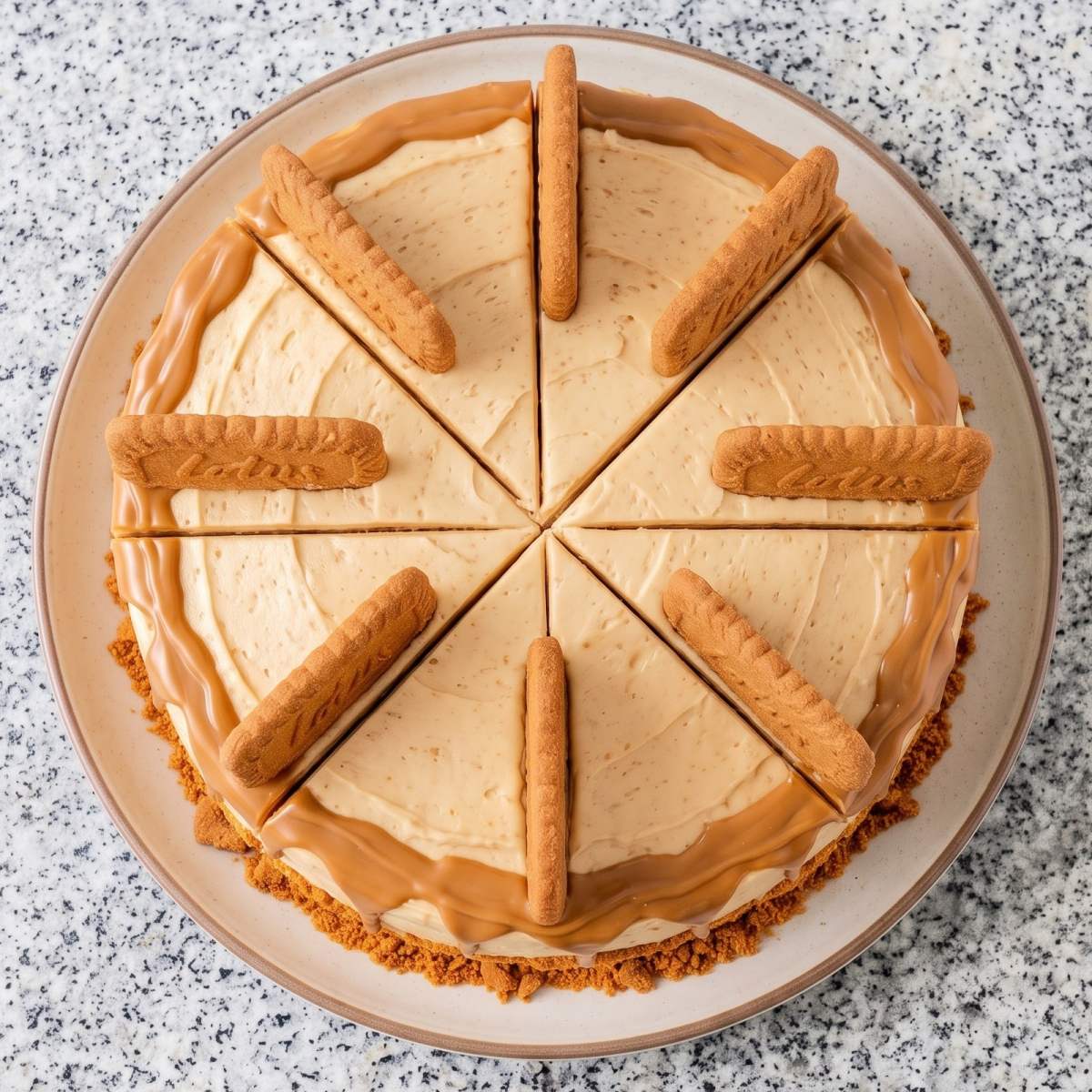
Spoon the melted cookie butter around the top edge, letting it drip down the sides, and spread the rest over the top. Stand the remaining whole cookies in the frosting on top before slicing.
Recipe Tips
Use Stick Butter Instead of Tub Butter
For both the cake and the frosting, I recommend using dairy-free baking sticks rather than spreadable butter from a tub.
Tub butter contains extra water and oils that will make your cake greasy and cause your frosting to turn runny.
Baking sticks hold their shape much better, which gives you a light cake crumb and a sturdy frosting that spreads easily.
Keep Your Wet Ingredients at Room Temperature
You’ll get the best results if your almond milk and eggs are truly at room temperature before you start mixing.
If you add cold liquids to creamed dairy-free butter, the plant fats will harden up quickly and cause your batter to split.
Setting your eggs and milk on the counter about an hour before baking ensures your batter stays smooth and creamy.
Cool the Melted Cookie Butter Before Dripping
From my experience, you should never pour the melted cookie butter over the cake while it is still warm from the microwave.
Dairy-free frosting melts much faster than dairy buttercream, and warm cookie butter will slide right off and melt your top layer.
Let the melted spread sit until it feels barely warm on your wrist, but is still fluid enough to run off a spoon.
What to Make Next
- Dairy Free Biscoff Cheesecake Cups
- Dairy Free Cinnamon Streusel Coffee Cake
- Dairy Free Cookie Butter Swirl Ice Cream
- Dairy Free Salted Caramel Layer Cake
- Dairy Free Sticky Toffee Pudding
Popular Questions
Is Lotus Biscoff spread naturally dairy free?
Yes, standard Lotus Biscoff spread and cookies are completely dairy free and vegan. They are made from plant oils, flour, and spices rather than milk or butter.
It is always a good habit to double check the product label before buying, just to make sure there have been no recipe changes.

Dairy Free Biscoff Cake
Equipment
- two 8-inch round cake pans
- electric mixer
Ingredients
- 1 cup Unsweetened Almond Milk, Room Temperature
- 1 tbsp Apple Cider Vinegar
- 2 1/2 cups All Purpose Flour
- 2 tsp Baking Powder
- 1/2 tsp Baking Soda
- 1/2 tsp Salt
- 1 tsp Ground Cinnamon
- 3/4 cup Dairy Free Butter, Softened
- 1/2 cup Biscoff Cookie Butter
- 1 cup Packed Light Brown Sugar
- 1/2 cup Granulated Sugar
- 3 Large Eggs, Room Temperature
- 2 tsp Vanilla Extract
- 1 cup Dairy Free Butter, Softened
- 1/2 cup Biscoff Cookie Butter
- 3 1/2 cups Powdered Sugar, Sifted
- 1 tbsp Unsweetened Almond Milk
- 1 tsp Vanilla Extract
- 1/8 tsp Salt
- 1/3 cup Biscoff Cookie Butter, Melted
- 12 Biscoff Cookies, Divided
Instructions
- Preheat the oven to 350°F, then grease two 8-inch round cake pans and line the bottoms with parchment paper. Stir the almond milk and vinegar together and set aside for 5 minutes.
- In a medium bowl, whisk together the flour, baking powder, baking soda, salt, and cinnamon.
- In a large bowl, beat the butter, cookie butter, brown sugar, and granulated sugar on medium-high speed for 3 minutes until fluffy. Add the eggs one at a time, then beat in the vanilla.
- With the mixer on low, add the flour mixture in three additions, alternating with the almond milk mixture, beginning and ending with the flour. Mix just until combined.
- Divide the batter between the pans and bake for 30 to 35 minutes, until a toothpick comes out clean. Cool in the pans for 10 minutes, then turn out onto a wire rack to cool completely.
- For the frosting, beat the butter and cookie butter until smooth and creamy. Gradually add the powdered sugar, then add the almond milk, vanilla, and salt and beat on medium-high for 3 minutes until fluffy.
- Place one cake layer on a serving plate, spread with frosting, and top with the second layer. Frost the top and sides, press 4 crushed cookies around the bottom edge, and chill for 20 minutes to firm up the frosting.
- Spoon the melted cookie butter around the top edge, letting it drip down the sides, and spread the rest over the top. Stand the remaining whole cookies in the frosting on top before slicing.